E-Waste Collection and Recycling Programme
Putrajaya achieved 100% e-waste recycling in 2025 — 95.435 metric tonnes of electrical and electronic waste collected and processed through AFES's integrated collection network, fully satisfying MS ISO 37122:2019 Indicator 57.
Overview
Putrajaya’s E-Waste Collection and Recycling Programme represents a fully operational, city-wide system for the responsible collection, transportation, and recycling of electrical and electronic waste (e-waste). Managed operationally by Alam Flora Environmental Solutions (AFES) under the supervision of Perbadanan Putrajaya (PPj), the programme achieved a 100% recycling rate in 2025 — collecting and recycling 95.435 metric tonnes of e-waste and fully satisfying the requirements of MS ISO 37122:2019 Indicator 57 (Recycled E-Waste).
E-waste — comprising discarded computers, televisions, mobile phones, home appliances, batteries, and other electrical and electronic equipment — is among the fastest-growing and most hazardous waste streams globally. Without proper management, e-waste releases toxic substances including lead, mercury, and cadmium into soil and groundwater. Putrajaya’s approach ensures every kilogram collected is channelled through certified recycling pathways.
2025 Performance: 100% Achievement
MS ISO 37122:2019 — Indicator 57 Formula:
[\text{IND-57} = \frac{A}{B} \times 100 = \frac{95.435}{95.435} \times 100 = \mathbf{100\%}]
Where:
- A = Total e-waste recycled in metric tonnes (2025): 95.435 tonnes
- B = Total e-waste collected in the city in metric tonnes (2025): 95.435 tonnes
All e-waste collected in Putrajaya in 2025 was recycled — a full circular closure with zero e-waste to landfill.
2025 Monthly E-Waste Collection Data
| Month | E-Waste Collected (Tonnes) |
|---|---|
| January | 9.744 |
| February | 10.959 |
| March | 10.161 |
| April | 6.610 |
| May | 8.390 |
| June | 7.321 |
| July | 1.400 |
| August | 3.724 |
| September | 7.581 |
| October | 8.930 |
| November | 7.772 |
| December | 12.813 |
| TOTAL | 95.435 |
Key observations:
- December was the peak collection month at 12.813 tonnes — likely driven by year-end disposal of old electronics by households and offices.
- July recorded the lowest collection at 1.400 tonnes, reflecting typical mid-year festive period patterns.
- The Q1 (Jan–Mar) and Q4 (Oct–Dec) periods show consistently higher volumes, aligning with new device purchasing cycles and pre/post-holiday electronic replacements.
Integrated Recycling Ecosystem (2025 Full Data)
The e-waste programme operates as part of AFES’s comprehensive 9-category annual recycling collection system for Putrajaya:
| Category | 2025 Total (Tonnes) |
|---|---|
| Paper (Kertas) | 2,130.697 |
| Cooking Oil (Minyak Masak) | 383.813 |
| Plastic (Plastik) | 347.690 |
| Iron & Aluminium (Besi & Aluminium) | 312.408 |
| E-Waste (Sisa Elektrik & Elektronik) | 95.435 |
| Glass (Kaca) | 30.452 |
| Tetrapak (Karton Minuman) | 10.299 |
| Battery (Bateri) | 8.846 |
| Others (Lain-lain) | 5.319 |
| GRAND TOTAL | 3,324.959 |
This integrated data demonstrates that Putrajaya’s recycling infrastructure — operated by AFES — manages over 3,300 tonnes of recyclable material annually across nine distinct waste streams.
Collection Methodology
AFES Collection Routes
E-waste is collected through three complementary service channels:
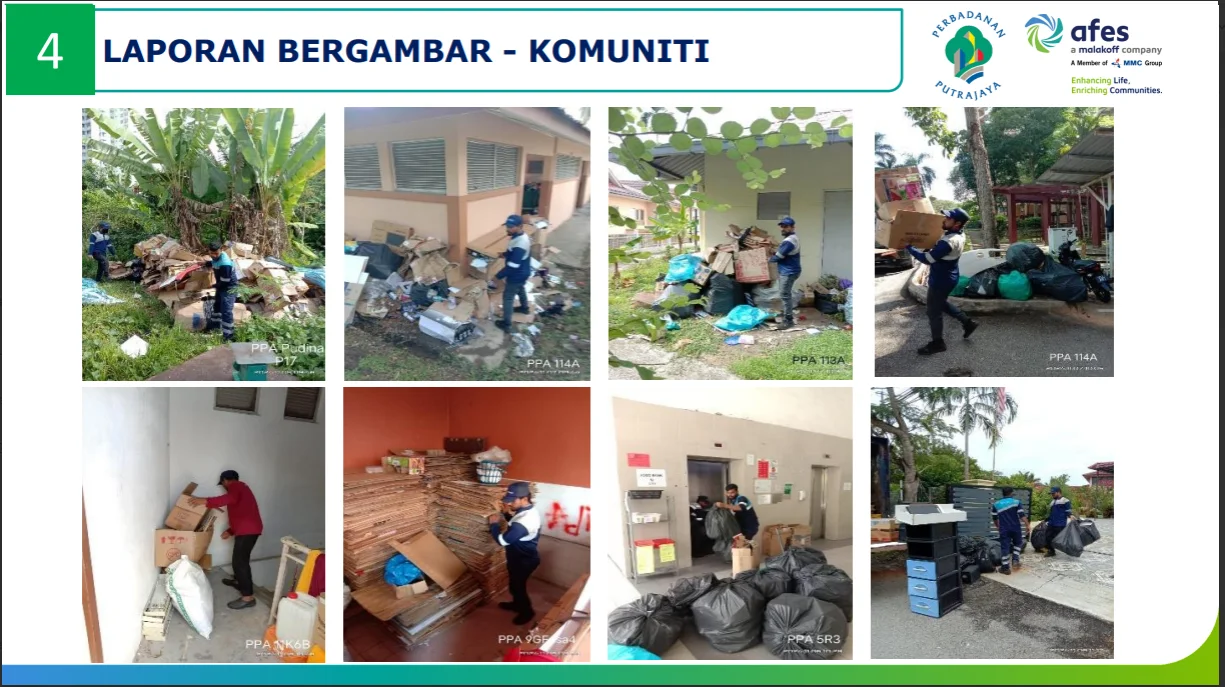
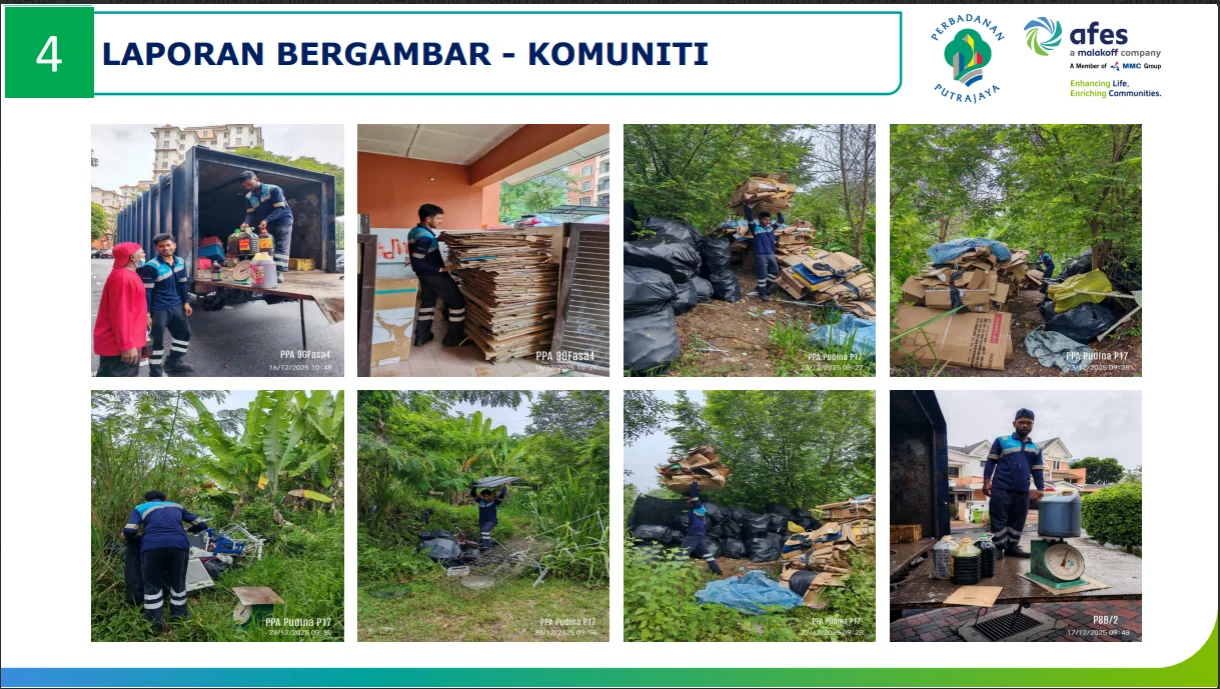
1. Komuniti (Residential) Collection Scheduled block-by-block collection from Putrajaya’s residential precincts (PPAs). AFES crews collect large electrical items (washing machines, televisions, computers) directly from household premises on a regular rotation across all precincts.
2. WasteWise (Commercial) Collection E-waste from government offices, retail outlets, and commercial tenants — including KPKT, Putra Point, Pasar Awam, and Perodua service centres — is collected through the WasteWise commercial stream. This ensures that office electronics (servers, printers, IT peripherals) are properly channelled to licensed recycling channels.
3. PKSK (Community Recycling Centres) Fixed-point collection centres (Pusat Kitar Semula Komuniti) in Precincts 9 and 18 provide residents with walk-in drop-off points for small e-waste items such as mobile phones, batteries, chargers, and small appliances.
IRF (Integrated Recycling Facility) Processing
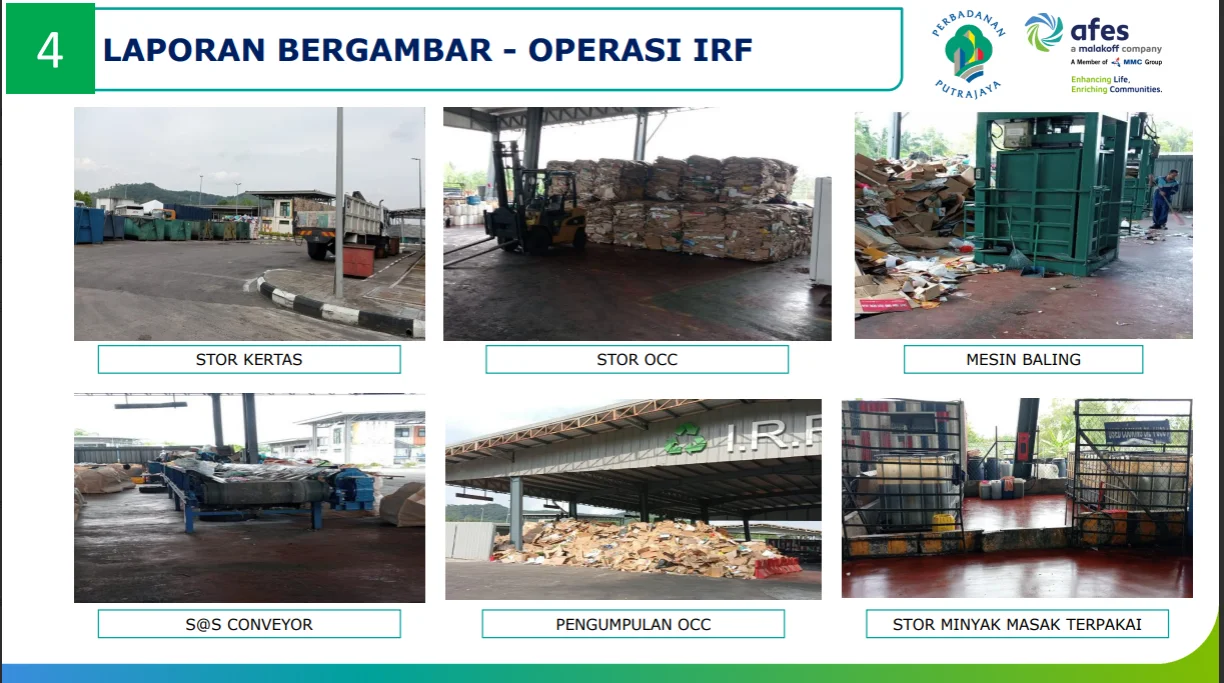
All collected e-waste is transported to the Integrated Recycling Facility (IRF) — a purpose-built processing hub operated by AFES within Putrajaya. At the IRF:
- E-waste is segregated by device category (IT equipment, consumer electronics, large appliances, batteries)
- Materials are sorted for downstream processing to SWCorp-licensed dismantlers and recyclers
- Baling and containerisation ensures safe transport to licensed processing plants
- Weight and tonnage data is recorded and reported monthly to PPj for IND-57 compliance tracking
PSCB Blueprint Alignment
| Framework | Alignment |
|---|---|
| PSCB Smart Application | 4.4 — Waste Management System (Integrated Recycling) |
| Domain Objective | Waste segregation by category to enhance the recycling rate |
| MSCF Pillar | Smart Environment — Circular Economy, E-Waste Stream Management |
| MS ISO 37122 | IND-57: Recycled E-Waste — 100% Achieved (2025) |
| SDGs | 11 (Sustainable Cities), 12 (Responsible Consumption & Production), 13 (Climate Action) |
Blueprint Status: Operational — IND-57 fully achieved at 100% recycling rate as of 2025 assessment year.
Key Highlights
Technology Stack