Sistem OSC 4.0 (Development Plan Portal)
Digital Submission & Processing of Development Plan Approvals

Overview
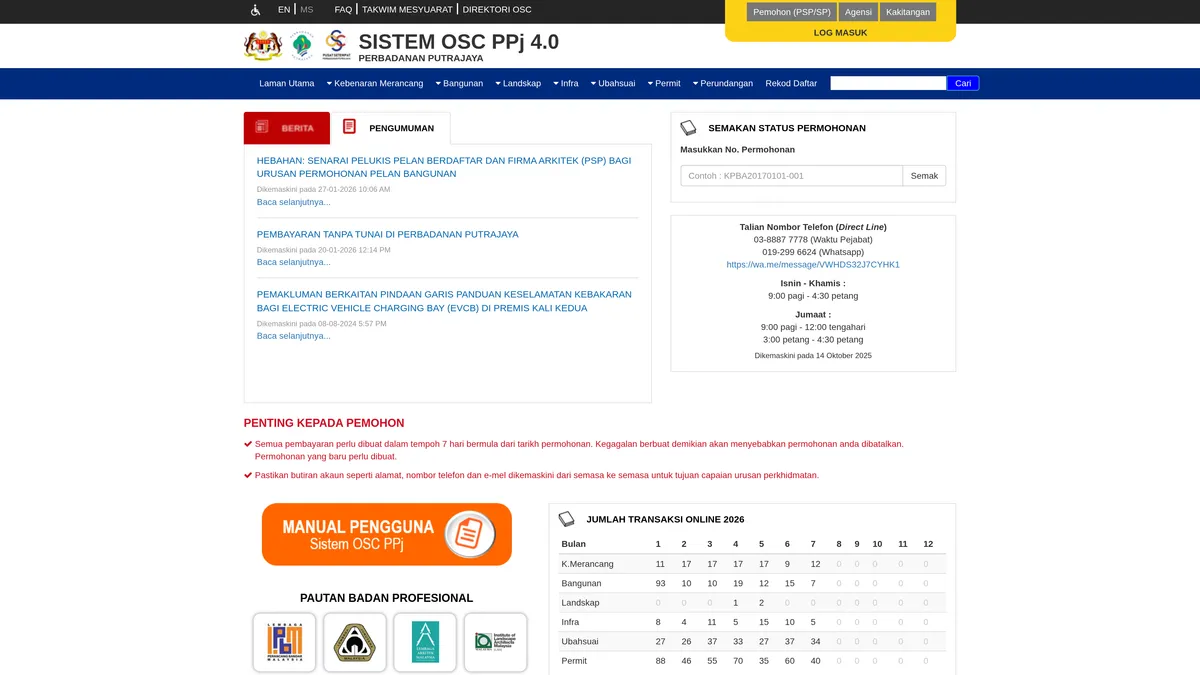
The OSC 4.0 Portal (osc.ppj.gov.my) is the operational backbone of Perbadanan Putrajaya’s (PPj) commitment to data-driven municipal governance under the Putrajaya Smart City Blueprint. It is the single authoritative system for managing the complete development lifecycle — from pre-consultation briefings to the issuance of the Certificate of Completion and Compliance (CCC) — across all six statutory phases of the Putrajaya development control process.
As a Smart Government Services initiative under PSCB Thrust 3, OSC 4.0 directly satisfies two critical MS ISO 37122:2019 assessment indicators: K4 (Indicator 2) on e-submission adoption, and K4 (Indicator 35) on construction permit approval cycle time — both fundamental metrics for Putrajaya’s progression toward Tahap 3: Leading Smart City.
System Architecture & Evolution
From Manual Processing to Smart Integration
The One Stop Centre (OSC) system in Putrajaya has undergone continuous digital transformation across three generations:
- The Early Phase (2000s–2012): Initial digital foundations through SPP1 and ESKL, establishing Putrajaya’s data-readiness groundwork.
- OSC 3.0 (2017): Introduced a formal web-based portal for online submission of development plans, engineering infrastructure, and landscape proposals — including the migration of a 15 Terabyte legacy database.
- OSC 4.0 (2022–present): Extended coverage holistically across six statutory phases of the development control cycle, from early-stage pre-consultation to final CCC issuance, with full internet accessibility replacing the previous intranet-only architecture.
Key Capabilities
OSC 4.0 replaces paper-bound bureaucracy with a transparent, high-throughput digital process anchored on four operational pillars:
- Borderless Access: Developers, architects, and consultants access the portal securely via the internet, eliminating geographic and time restrictions previously imposed by intranet-only systems.
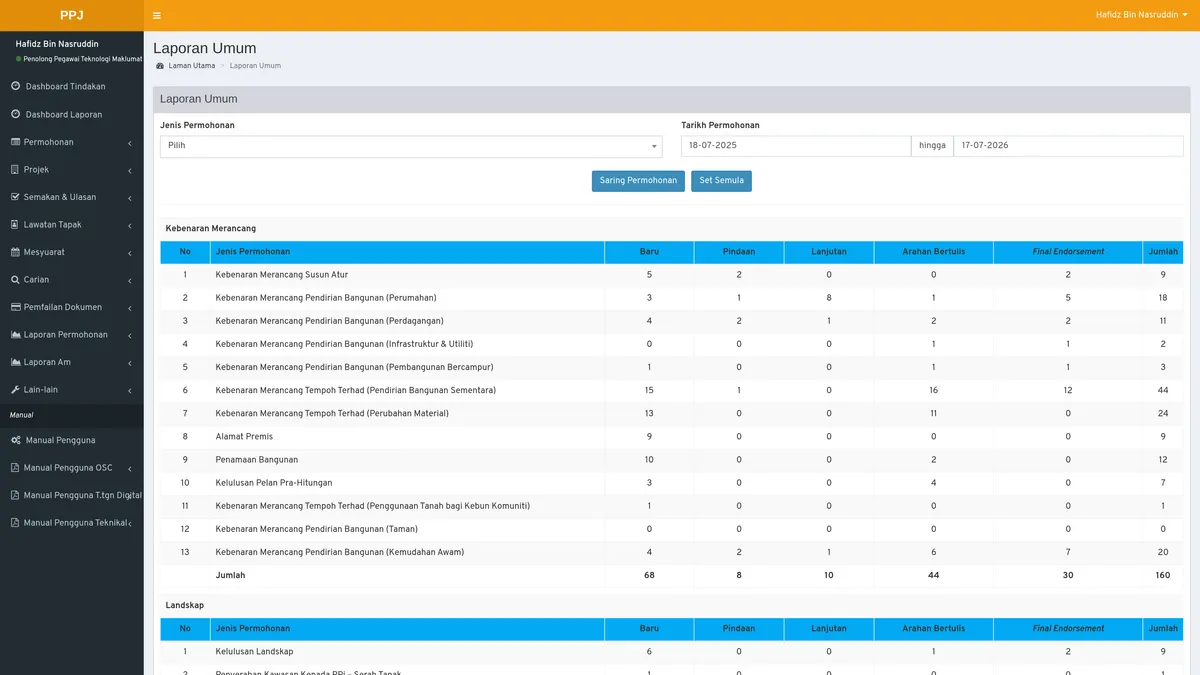
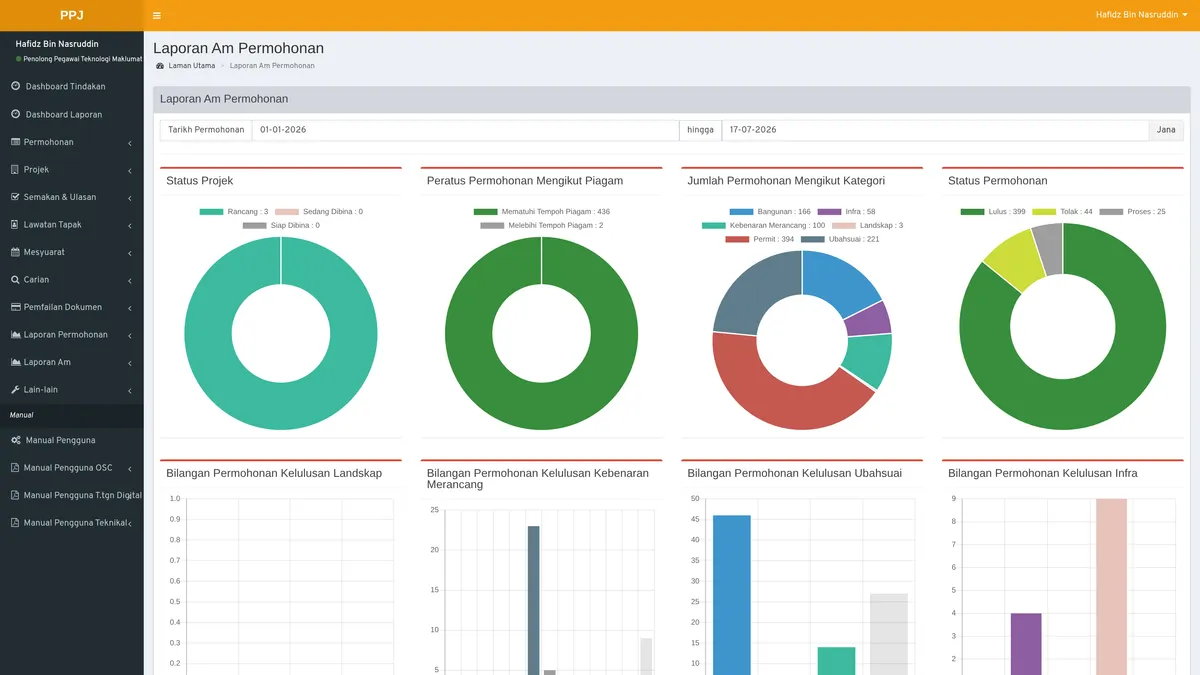
- Centralized Analytics: Administrative dashboards provide real-time visibility into approval cycle KPIs — enabling proactive intervention to prevent service charter breaches before they occur.
- Transparency & Audit Trails: Interactive messaging boards, shared review calendars, and timestamped document logs ensure full accountability between applicants and municipal technical agencies.
- Paperless Parallel Processing: Simultaneous digital document routing to all relevant technical agencies reduces processing time, eliminates print costs, and provides a verifiable audit trail compliant with PDPA data governance requirements.
Strategic Alignment
| Framework | Alignment |
|---|---|
| MSCF Component | Smart Government |
| PSCB Thrust | Thrust 3: Smart Government Services |
| MS ISO 37122:2019 | Indicator 2 (E-Submission), Indicator 35 (Permit Approval Days) |
| SDG | Goal 11 (Sustainable Cities), Goal 16 (Strong Institutions), Goal 17 (Partnerships) |
Future Direction
As OSC 4.0 matures, three strategic enhancements are planned under the Putrajaya Smart City Blueprint:
- Connected Geospatial Systems: Integration with cadaster boundary data and land inventory registries to provide planners with spatially accurate baseline references for all development decisions.
- Economic Competitiveness: Further reduction of permit processing cycles to directly accelerate property investment activity and support Putrajaya’s position as Malaysia’s premier administrative capital.
- Predictive Analytics: Leveraging OSC 4.0’s five-year dataset to develop predictive models for development activity patterns, enabling proactive planning and infrastructure resource allocation.
Key Highlights
Technology Stack