Green Building Certification Programme
Putrajaya's systematic programme tracking buildings constructed or refurbished within a 5-year rolling window that comply with green building principles — demonstrating the city's commitment to sustainable, energy-efficient, and climate-resilient urban development.
Overview
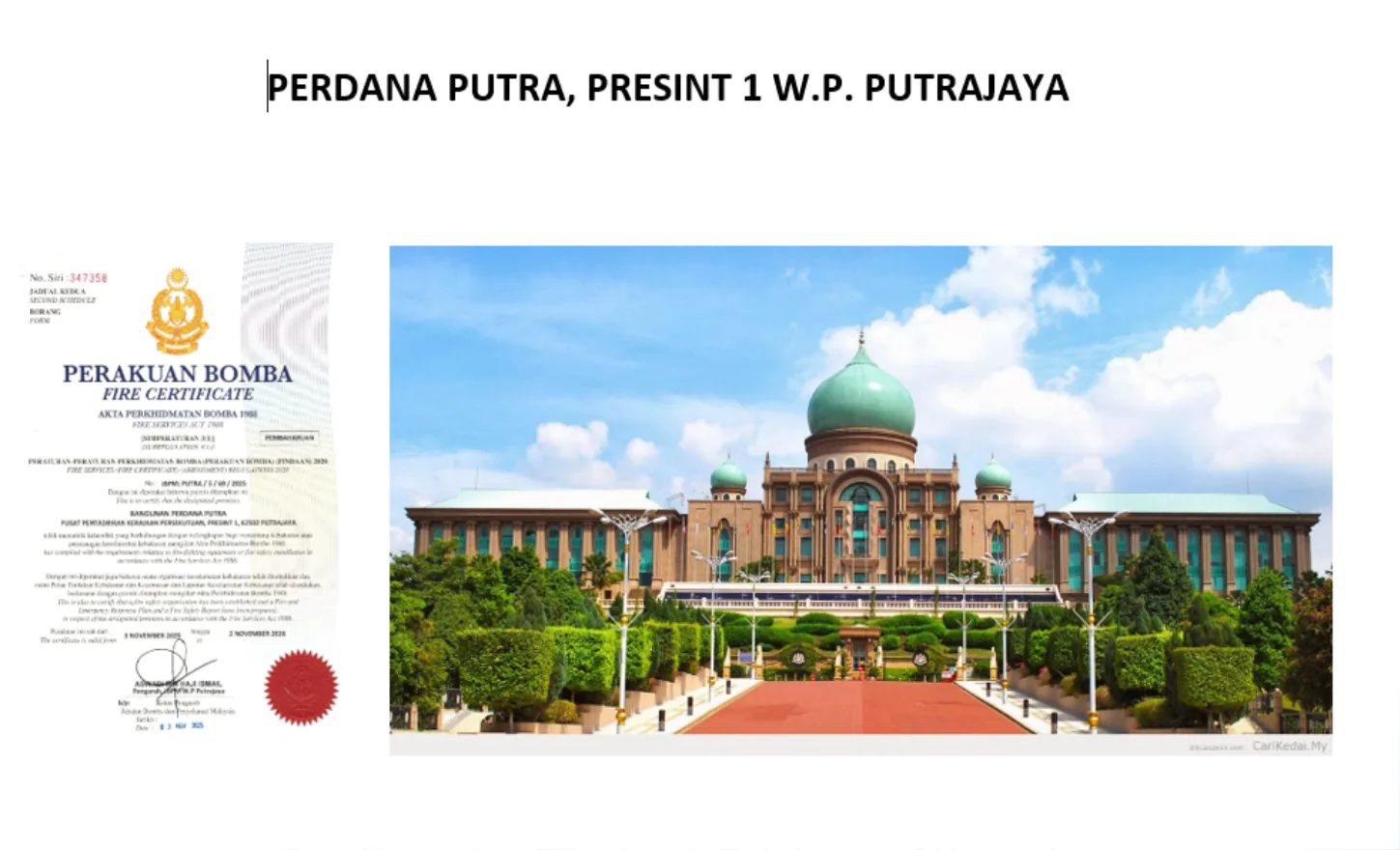
Putrajaya’s Green Building Certification Programme represents the city’s systematic commitment to ensuring that new and refurbished buildings comply with internationally recognised green building principles — reducing carbon emissions, lowering energy consumption, and embedding climate resilience into the built fabric of Malaysia’s federal administrative capital.
As the designated Federal Territory planned from inception as a garden city, Putrajaya holds a unique responsibility to lead by example in sustainable building practices. This programme tracks all buildings constructed or significantly refurbished within a rolling 5-year window that have been certified under green building standards — providing auditable evidence for K4 (Indicator 15) of the Malaysia Smart City Rating Programme.
All government buildings in the registry are certified under MyCREST (Malaysian Carbon Reduction and Environmental Sustainability Tool), Malaysia’s national green building rating system. Green compliance is verified through two primary mechanisms: SPAH (Sistem Penuaian Air Hujan — rainwater harvesting system) and Solar (rooftop photovoltaic panels), both physically verified and documented per building.
Section A: Buildings BUILT 2021–2025 with Green Certification
In the 5-year assessment period from 2021 to 2025, 12 buildings in Putrajaya were constructed or refurbished in compliance with green building principles and hold valid green building certification.
A1. Government Buildings — Built 2021–2025 (5 Buildings)
| Bil. | Building Name | Category |
|---|---|---|
| 1 | Kompleks Perbadanan Putrajaya | Office |
| 2 | Kementerian Komunikasi (4G9) | Office |
| 3 | Kementerian Luar Negeri Malaysia | Office |
| 4 | Kementerian Pembangunan Wanita, Keluarga dan Masyarakat (4G11) | Office |
| 5 | Kementerian Perumahan dan Kerajaan Tempatan (4G10) | Office |
A2. Commercial Buildings — Built 2021–2025 (7 Buildings)
| Bil. | Building Name | Category |
|---|---|---|
| 1 | Akademi Perubatan Putrajaya | Institution |
| 2 | Terra Residence (8MD3) | Residential |
| 3 | Destina Putrajaya (7MD7) | Commercial |
| 4 | Shaftsbury Putrajaya | Commercial |
| 5 | Zenith Putrajaya | Hotel |
| 6 | Menara PJH Lot 2C2 | Office |
| 7 | Heriot Watt University | Institution |
Total (Built 2021–2025): 5 government + 7 commercial = 12 buildings
Section B: Buildings TO BE BUILT (2025) with Green Certification
An additional 3 buildings planned for construction in 2025 are required to comply with green building principles as a condition of their development approval.
B1. Government Buildings — To Be Built 2025 (1 Building)
| Bil. | Building Name | Category |
|---|---|---|
| 1 | Kompleks Puspahanas | Office |
B2. Commercial Buildings — To Be Built 2025 (2 Buildings)
| Bil. | Building Name | Category |
|---|---|---|
| 1 | Kompleks Geosains | Commercial |
| 2 | Kedutaan Indonesia | Office |
Total (To Be Built 2025): 1 government + 2 commercial = 3 buildings
Combined Summary
| Category | Built 2021–2025 | To Be Built (2025) | Total |
|---|---|---|---|
| Government | 5 | 1 | 6 |
| Commercial / Institutional / Residential | 7 | 2 | 9 |
| Total | 12 | 3 | 15 |
Detailed Building Profiles — Government Buildings (Built 2021–2025)
The following profiles are drawn from the official assessment documentation submitted for K4 (Indicator 15) of the Malaysia Smart City Rating Programme — Tahap 3 (Leading Smart City).
| Bil. | Building Info | SPAH Compliance | Solar Compliance | Green Certification | IBS Construction |
|---|---|---|---|---|---|
| 1 | Kompleks Perbadanan Putrajaya Architect: Aqidea Arkitek GFA: ~75,600 sqm Year Built: 2004 Presint: 3 ~50m height — 2 Office Blocks (9 floors), 2 Annex Halls, 1 Gateway structure, 2 basement parking levels |
✅ PATUH (Basement carpark — plant irrigation use) |
✅ PATUH (Rooftop garden area) |
MyCREST 2 Star (First PBT complex to receive MyCREST certification) |
N/A |
| 2 | Kementerian Komunikasi (4G9) Architect: FCMC GFA: ~120,135 sqm Year Built: 2009 Presint: 4 160m, 39 floors — 2 basement carpark levels, songket-motif façade |
✅ PATUH (Rooftop — grey water use) |
N/A | MyCREST 2 Star | N/A |
| 3 | Kementerian Luar Negeri Malaysia Architect: MAA Arkitek GFA: ~20,000 sqm Year Built: 2001 Presint: 2 20m height — Office suites, Minister’s office, meeting rooms, public spaces; traditional-modern architectural fusion |
✅ PATUH (Rooftop) |
✅ PATUH | MyCREST 2 Star | N/A |
| 4 | Kementerian Pembangunan Wanita, Keluarga dan Masyarakat (4G11) Architect: Hijjaz Kasturi GFA: ~140,000 sqm Year Built: 2011 Presint: 4 171.8m, 39 floors |
✅ PATUH (Rooftop) |
✅ PATUH (Rooftop) |
MyCREST 1 Star | N/A |
| 5 | Kementerian Perumahan dan Kerajaan Tempatan (4G10) Architect: Arkitek ICB GFA: ~108,650 sqm Year Built: 2011 Presint: 4 145m, 30–40 floors — 2 rooftop levels, 2 underground basement carpark levels |
✅ PATUH (Rooftop) |
✅ PATUH (Rooftop) |
MyCREST 1 Star | N/A |
SPAH = Sistem Penuaian Air Hujan (Rainwater Harvesting System) · Solar = Rooftop Photovoltaic System · IBS = Industrialised Building System
Detailed Building Profiles — Commercial Buildings (Built 2021–2025)
| Bil. | Building Info | SPAH Compliance | Solar Compliance | Green Certification | IBS Construction |
|---|---|---|---|---|---|
| 1 | Akademi Perubatan Malaysia Architect: GDP Arkitek GFA: ~20,000 sqm Year Built: 2024 Presint: 8 25m height, 6 floors — Academic block, research rooms, forum hall, medical equipment rooms, lecture halls, meeting rooms; basement parking |
✅ PATUH (Building utility area) |
✅ PATUH (Rooftop) |
GBI NRNC Certified | N/A |
| 2 | Terra Residence (8MD3) Architect: GDP Arkitek & ZDR Arkitek GFA: ~230,123 sqm Year Built: 2024/2025 Presint: 8 Mixed development — 1 block 44 floors (132m, 187 units), 2 blocks 30 floors (90m, 280 units), 1 block 30 floors (64m, 121 serviced hotel units); podium with gym arena, multipurpose hall, pool, rooftop garden |
✅ PATUH (Building utility area) |
✅ PATUH (Rooftop) |
GBI RNC Certified | ✅ PATUH (IBS for formwork system & building façade; ~30–40% IBS usage) |
| 3 | Destina Putrajaya (7MD7) Architect: TriArch Arkitek GFA: ~20,000 sqm Year Built: 2024 Presint: 7 ~80m height — 7 carpark floors, ground floor commercial lots, public pedestrian bridge, sub-basement utility level; kelarai-motif façade texture |
✅ PATUH (Rooftop) |
✅ PATUH (Rooftop) |
GBI NRNC Certified | ✅ PATUH (IBS for main structural components; ~30–40% IBS usage) |
| 4 | Shaftsbury Putrajaya Architect: Pratika Arkitek GFA: ~130,000 sqm Year Built: 2014 Presint: 1 Serviced apartment block (746 luxury units), hotel block, shopping centre, recreational area, commercial lots |
✅ PATUH (Rooftop) |
✅ PATUH (Rooftop) |
GBI RNC Certified | N/A |
| 5 | Zenith Hotel Putrajaya Architect: Aqidea Arkitek GFA: ~130,000 sqm Year Built: ~2017 (operational 2019) Presint: 2 13 floors, 50–60m height — 253 hotel rooms, rooftop pool, recreation areas; strategic lakeside location with Wawasan Bridge views |
✅ PATUH (Rooftop) |
N/A | GBI NRNC Silver Rating | N/A |
| 6 | Menara PJH Lot 2C2 Architect: PAB Arkitek / Jafri Merican Arkitek GFA: ~54,000 sqm Year Built: 2012 Presint: 2 ~40m height, 10 office floors — courtyard recreation area, mezzanine area, sub-basement carpark |
✅ PATUH (Rooftop) |
✅ PATUH (Rooftop) |
GBI NRNC Gold | ✅ PATUH (IBS for main slab structural components & building façade; ~30–40% IBS usage) |
| 7 | Heriot Watt University Architect: Hijjaz Kasturi Arkitek GFA: ~30,000–50,000 sqm Year Built: 2014 Presint: 5 ~25m height, 6 floors — lecture block, extensive rooftop green area, amphitheatre, meeting rooms, utility |
✅ PATUH (Internal building area) |
N/A | GBI NRNC Certified | ✅ PATUH (IBS for main slab structural components & building façade; ~35–40% IBS usage) |
SPAH = Sistem Penuaian Air Hujan · Solar = Rooftop Photovoltaic System · IBS = Industrialised Building System · GBI NRNC = Green Building Index Non-Residential New Construction · GBI RNC = Green Building Index Residential New Construction
Construction Activity — 5-Year Trend (2021–2025)
Total building construction activity in Putrajaya across the 5-year assessment window:
| Year | Buildings Constructed |
|---|---|
| 2021 | 18 |
| 2022 | 13 |
| 2023 | 14 |
| 2024 | 12 |
| 2025 | 43 |
| Total | 114 |
The significant increase in 2025 construction activity (43 buildings) reflects ongoing urban development momentum in Putrajaya, with the green building penetration rate standing at 13.2% (15 of 114) over the full 5-year period.
Green Building Standards & Certification
Buildings are assessed and certified against recognised green building standards:
- MyCREST (Malaysian Carbon Reduction and Environmental Sustainability Tool) — National green rating tool for public sector buildings; 1-Star and 2-Star tiers applied across Putrajaya government buildings
- Green Building Index (GBI) — Malaysia’s national green building certification system, assessing Energy Efficiency, Indoor Environment Quality, Sustainable Site Planning, Materials & Resources, Water Efficiency, and Innovation
- LEED (Leadership in Energy and Environmental Design) — International green building certification accepted for embassy and institutional buildings
- MS 1525: Code of Practice on Energy Efficiency and Use of Renewable Energy for Non-Residential Buildings — Malaysian Standard governing energy performance benchmarks
- Akta Jalan, Parit dan Bangunan 1974 (Akta 133) — Statutory building approval framework under which green building compliance is documented
Evidence documentation for each building includes: building list, photographic records, certificate numbers, and sample certificates — submitted to the Smart City Rating assessment authority.
PSCB Blueprint Alignment
This initiative is classified under Thrust 4: Smart Infrastructure & Utilities within the Putrajaya Smart City Blueprint (PSCB) and contributes to Putrajaya’s Smart Environment pillar under the Malaysia Smart City Framework (MSCF).
Strategic Objective (PSCB): Establish Putrajaya as a model green city by ensuring all new and refurbished buildings comply with recognised green building standards — reducing the city’s carbon footprint and improving energy efficiency across its built environment.
Desired Outcomes:
- Increased percentage of green-certified buildings in Putrajaya’s total stock — contributing to national Net Zero targets.
- Reduction in building-sector energy consumption through mandatory green building standards for public sector construction.
- Creation of an auditable, data-driven register of green buildings in Putrajaya — supporting K4 (Indicator 15) smart city rating compliance.
- Model for other Malaysian local authorities in embedding green building principles into urban development approval workflows.
MSCF Component: Smart Environment (Green Building Standards & Climate Resilience)
Blueprint Status: Ongoing Programme (5-Year Rolling Assessment)
Key Highlights
Technology Stack